|
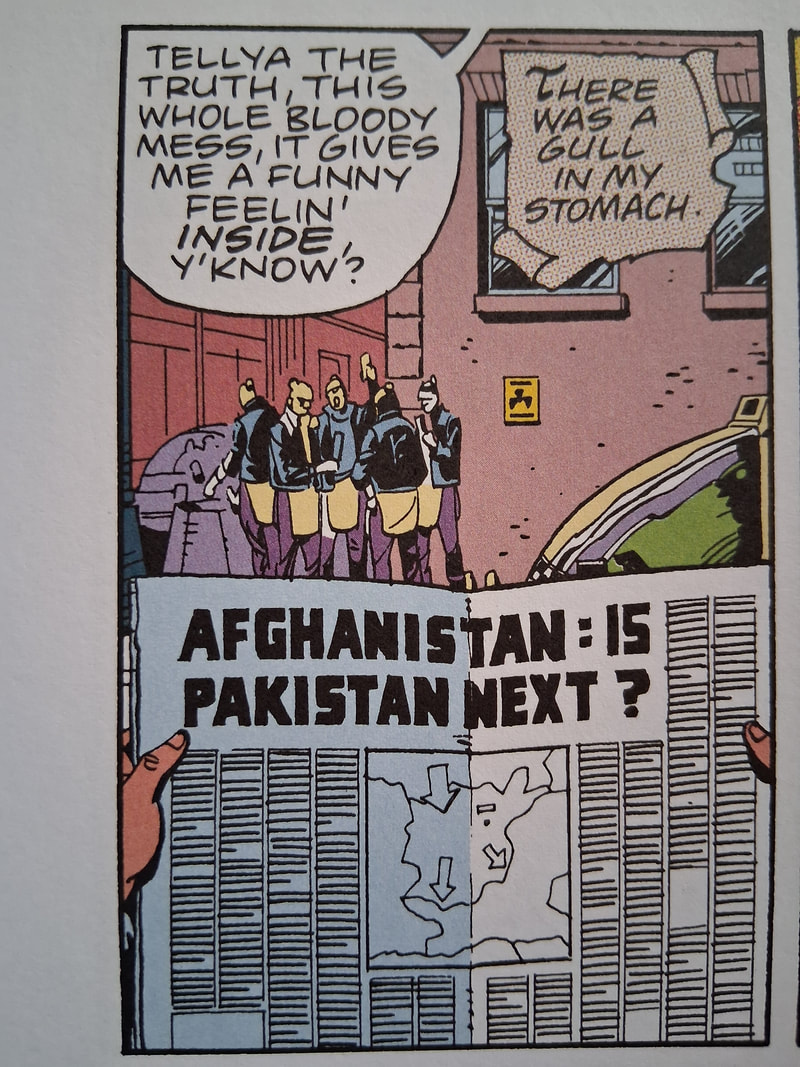
A few weeks ago I reread volume 1 of Promethea, which had been on my nightstand for some time. It was great, and led me to look up what Alan Moore's been doing lately. I read The Great When, his latest book, and the first in a series. The Great When was thoroughly enjoyable, and I'll look forward to the upcoming volumes, but it also reminded me I hadn't read Watchmen in a while. 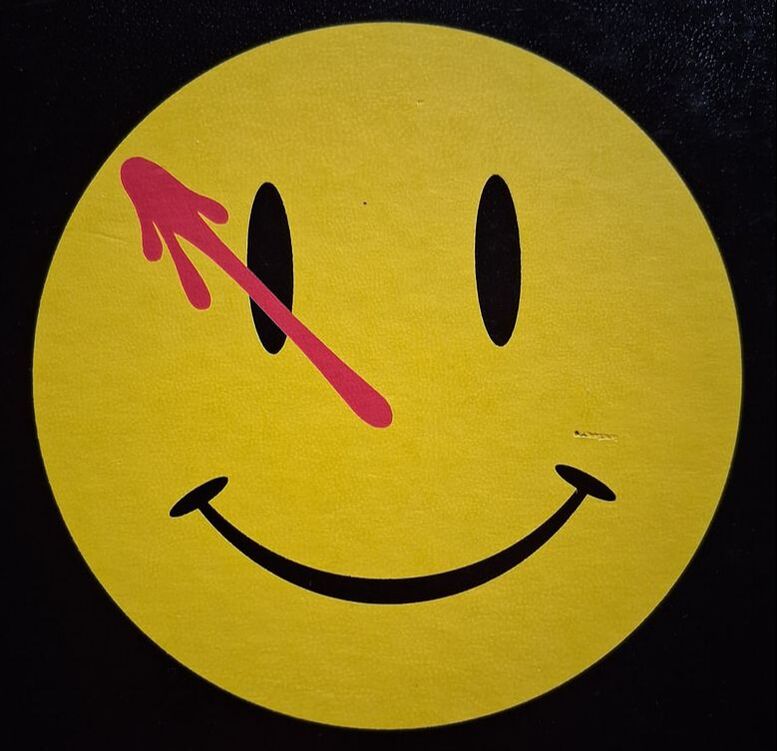 I first read Watchmen as a teenager. I skipped the prose sections, gobbled up the violence, and didn't really understand the ending. (Basically the way I imagine the director of the Watchmen film read it.) I read it again in my twenties and I was blown away. Watchmen and Scott McCloud's Making Comics convinced me it was worthwhile to keep reading comics into adulthood, and even to try my hand at making 'em. Watchmen was so utterly, amazingly, astoundingly good that I read it almost annually for the next decade, or so, and I always found some new layer, some clever allusion I'd missed, some overlooked detail. Now it had been a few years, and I wondered if it would still hold up, if it could possibly serve up any new facets. Honestly, I was pretty doubtful. I went into the reread with the familiar sinking feeling that I was about to discover that something that had been important to me didn't hold up to scrutiny, now that I was older -- and I couldn't have been more wrong. Within the first few pages I spotted a newspaper headline mentioning that Vietnam had become the 51st state. A small detail, but one which enriches an already rich, fully imagined world. The story drew me in and I was hooked. Below are a few things that made this reread so thoroughly enjoyable. Look how neatly these two images, which show the same scene from different angles, mirror each other? I actually don't love Dave Gibbons's art, but he was the perfect artist for this book.
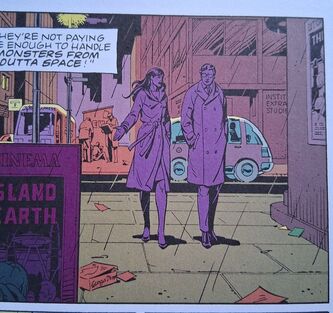
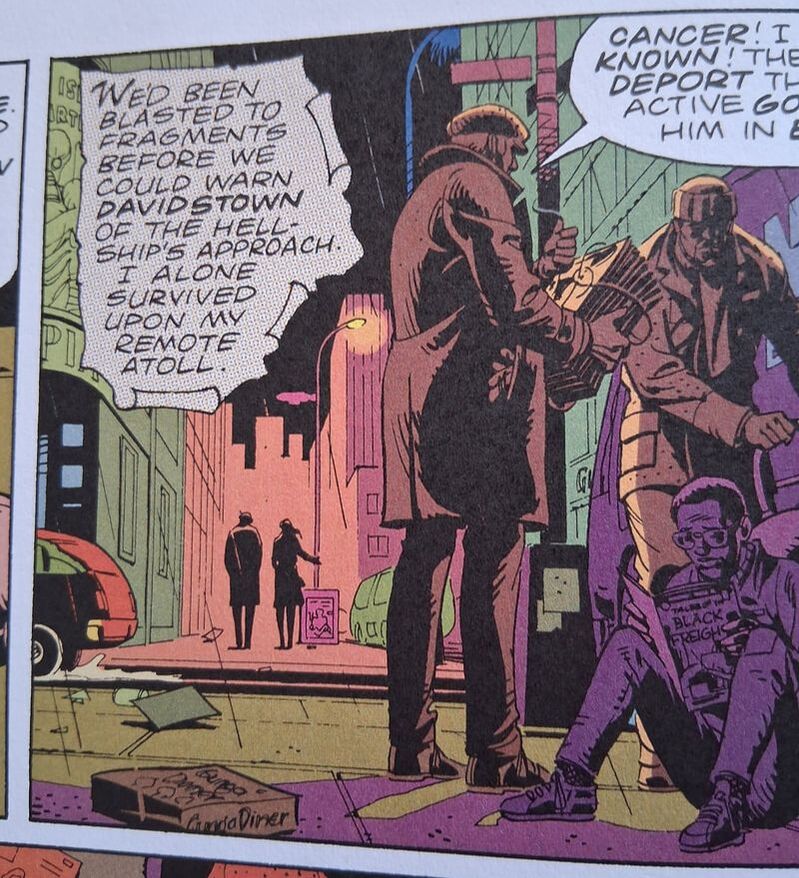
I spotted loads of things like that (I think it helped that I was reading the "absolute" edition, with extra large pages), lots of details of characters entering or leaving the scene in the background, lots of examples of the extraordinary clarity of the book's geography.
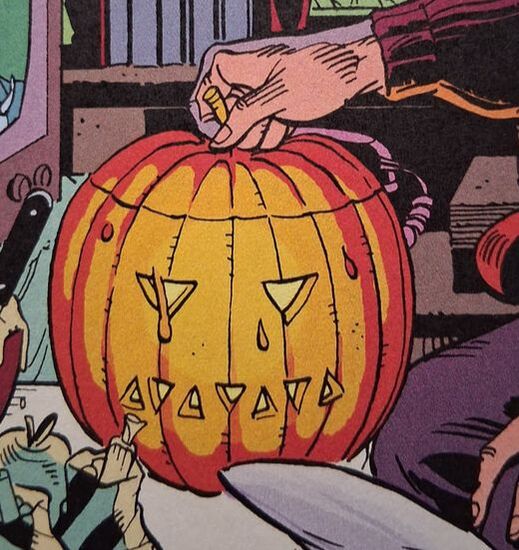
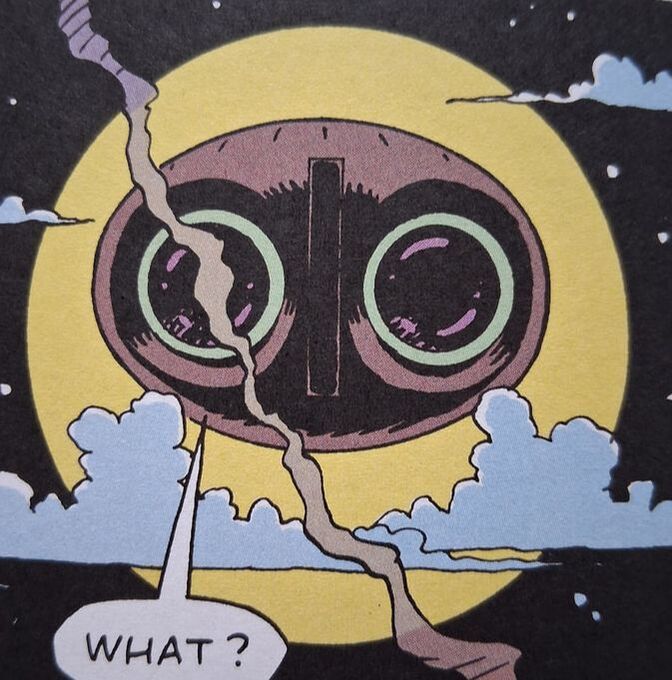
What may have surprised me most of all was the book's humor. 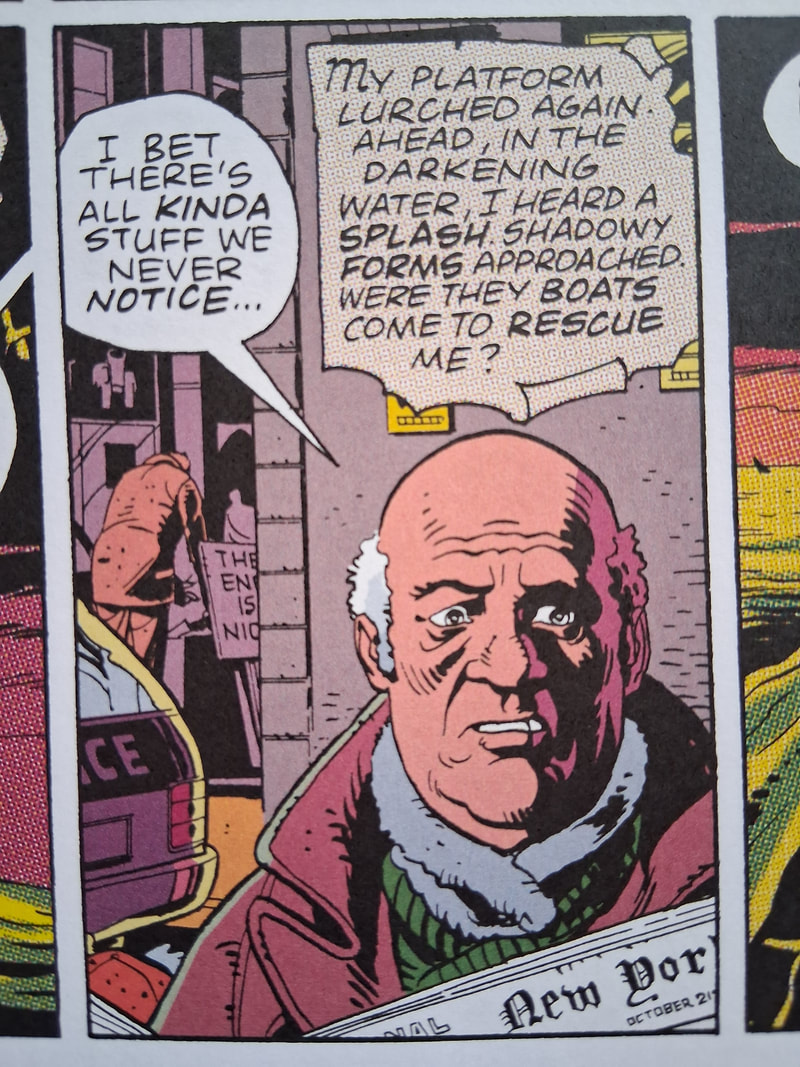 (As Rorschach checks his letter-drop in the background.) Or this one: 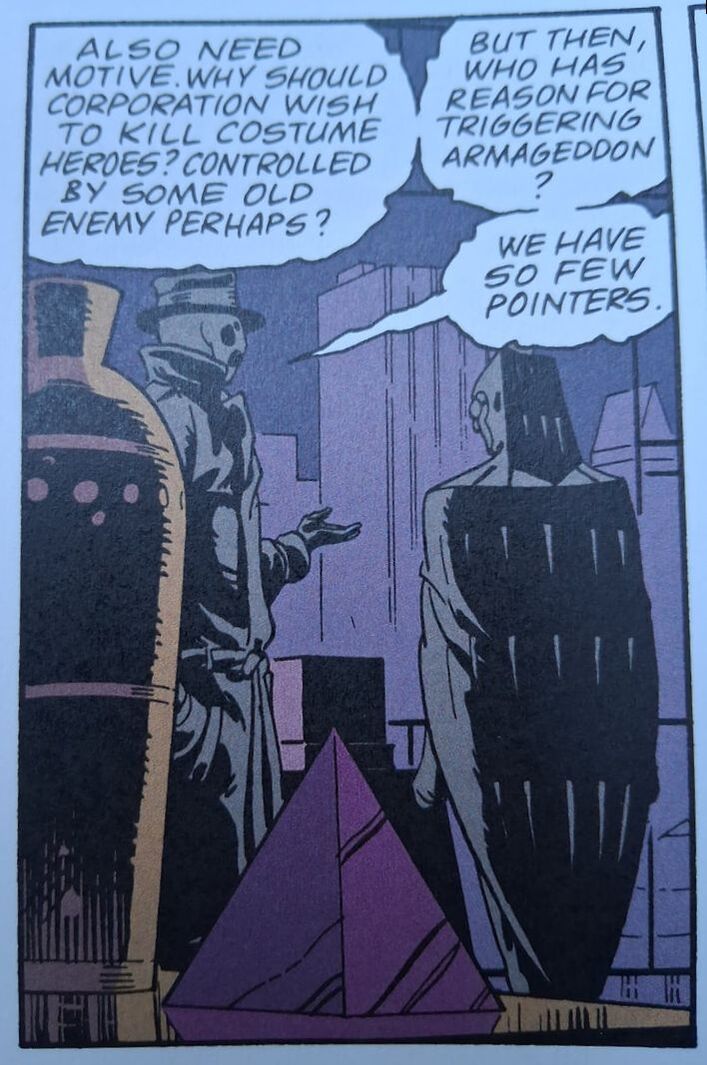 It's always fun to spot all the repetitions of the motif of the smiley pin with the streak of blood over its eye. I only just noticed how the moon becomes the yellow circle of the smiley pin in the one below, on the right, as I was cropping the image. That's what makes talking and writing about these things worthwhile, I think -- you discover stuff along the way.
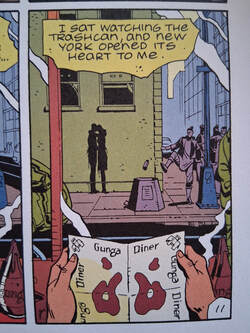
Some, like the ones above, are obviously intentional, but once you're on the lookout you see it everywhere, and the question arises whether it was intentional or not. What do you think of that oddly-shaped, broken piling in front of the eye of the owl-ship, below? 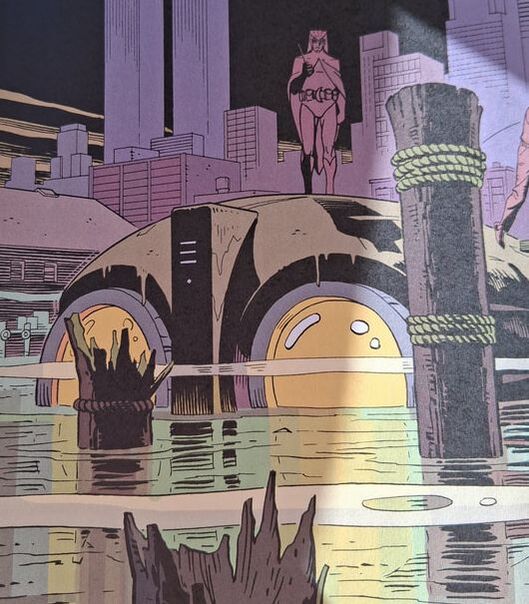 Below is an example of a wonderful detail I never before noticed: the way Jon and Laurie's disappearance from the scene reveals the haunting graffiti silhouette of a couple kissing (that was spray-painted on the wall earlier in the book). I don't know what it means, but it makes my heart ache. To me, this is comics at its best, conveying something ineffable with pure imagery. In the wake of the destruction of the neighborhood it seems to suggest something about war, and the grim shadows of obliterated people left on the walls of Hiroshima, but also hint at something poignant and heartbreaking in the end of Jon and Laurie's long romantic relationship. So few comics reward slow reading and close examination, but this one -- wow. 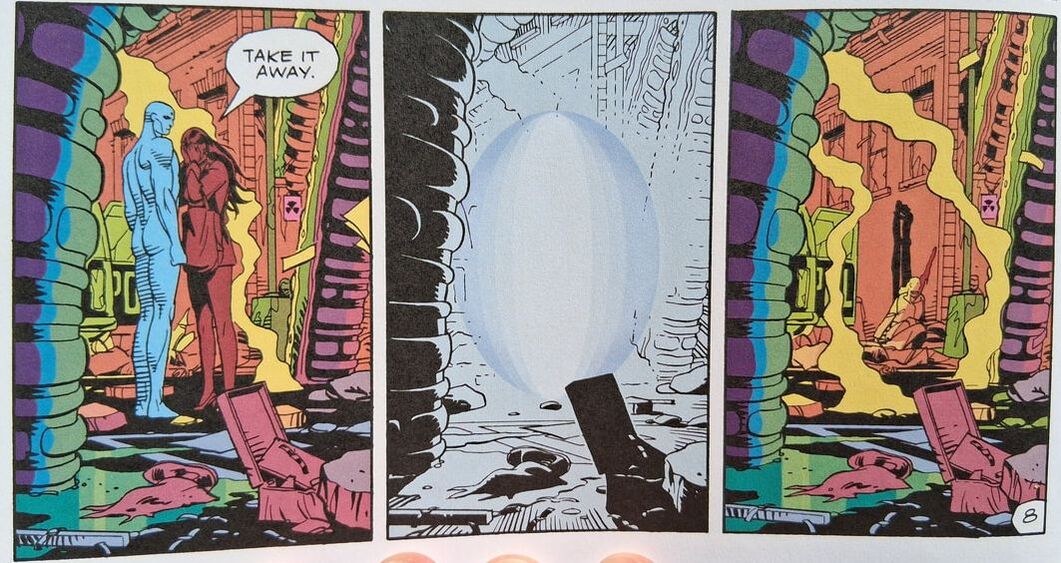 In praise of the book's amazing visual storytelling I have to draw attention to this superbly chilling "dolly-in" on Rorschach, as everyone's gradually coming to the conclusion they'll have to side with Adrian in order that all the killing won't have been in vain. 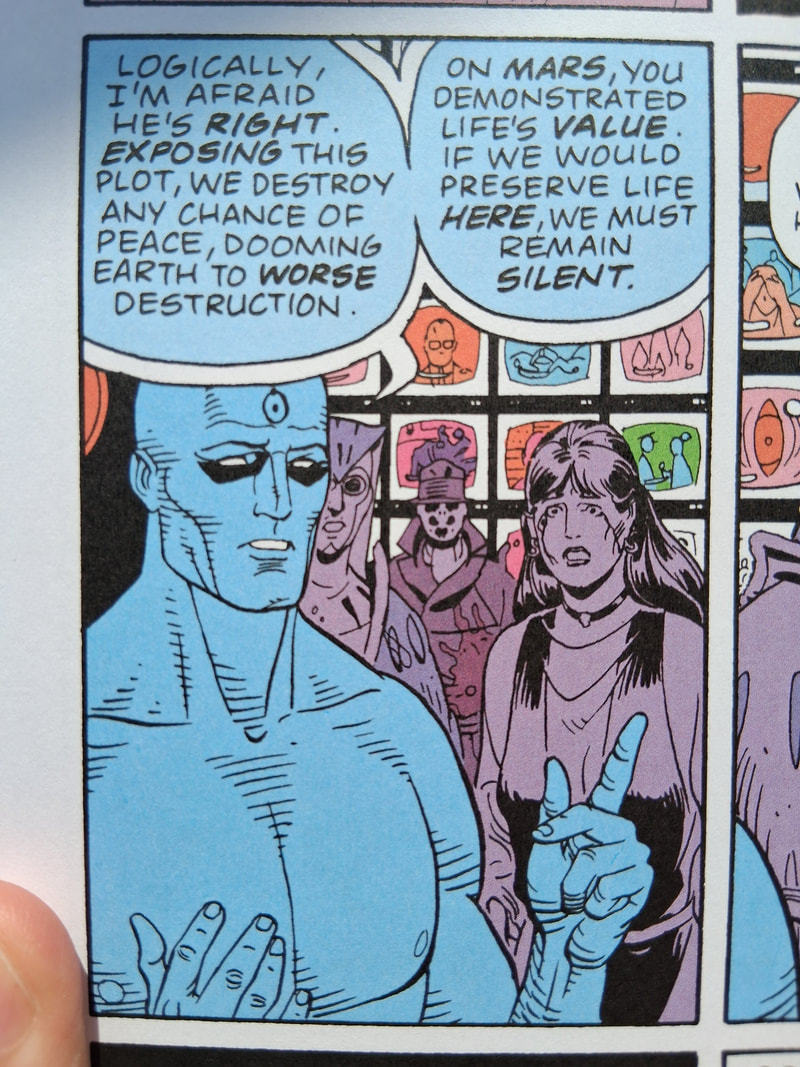 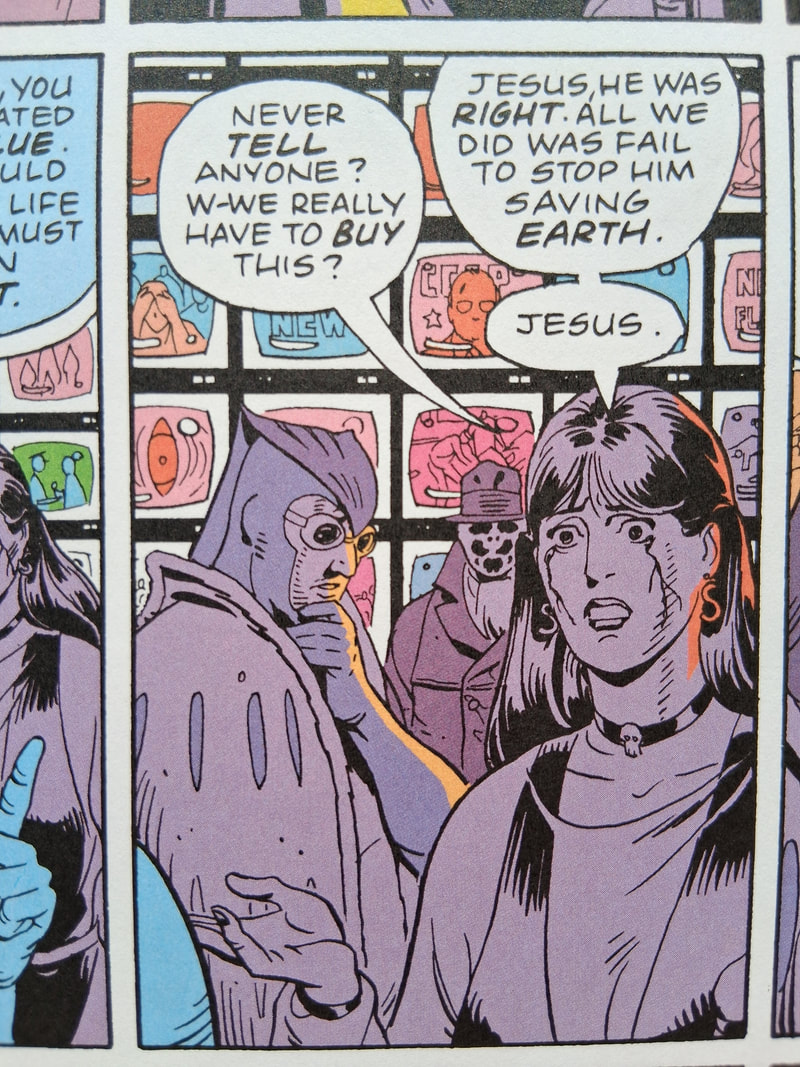 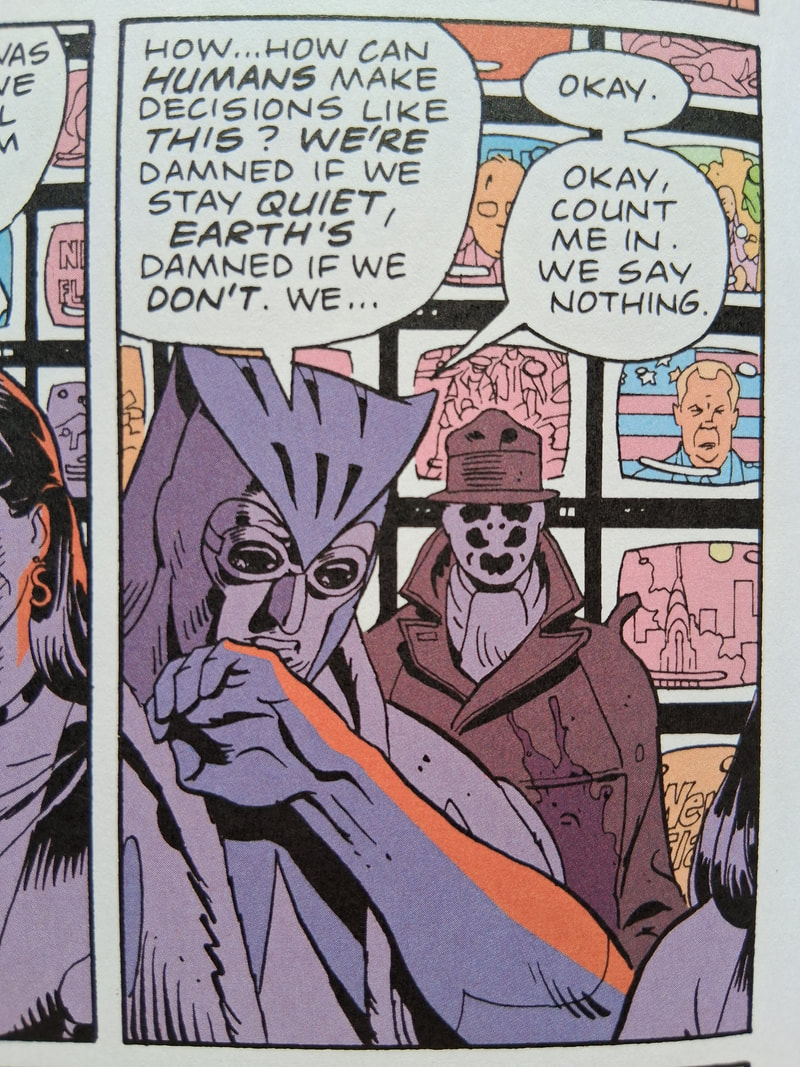 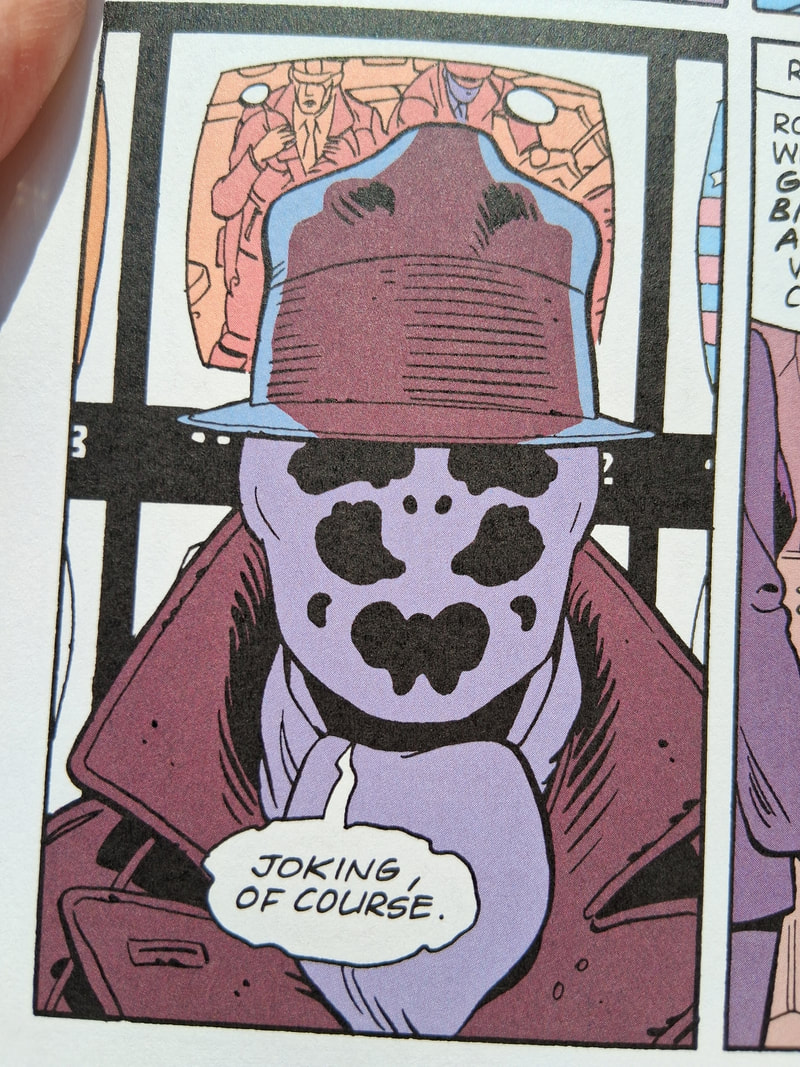 But perhaps the biggest surprise to me was how one character with a fairly small role grew in my esteem. I always thought Dr Malcolm Long, Rorschach's prison therapist, was a fatuous character, who gets his comeuppance when his pampered, superficial naivete is ripped away from him and he gradually awakens to the fact that life is far stranger and darker than he's ever imagined. What I didn't remember was how his character arc ended. It wasn't till now -- when I'm 45, divorced, and have had a taste of heartbreak and hardship -- that I was able to fully grasp the nobility he displays by making the choice to help, to choose kindness, in spite of everything, and at the imminent risk of losing everything. On this reread, for me, he went from being a secondary character to perhaps the heart of the book. 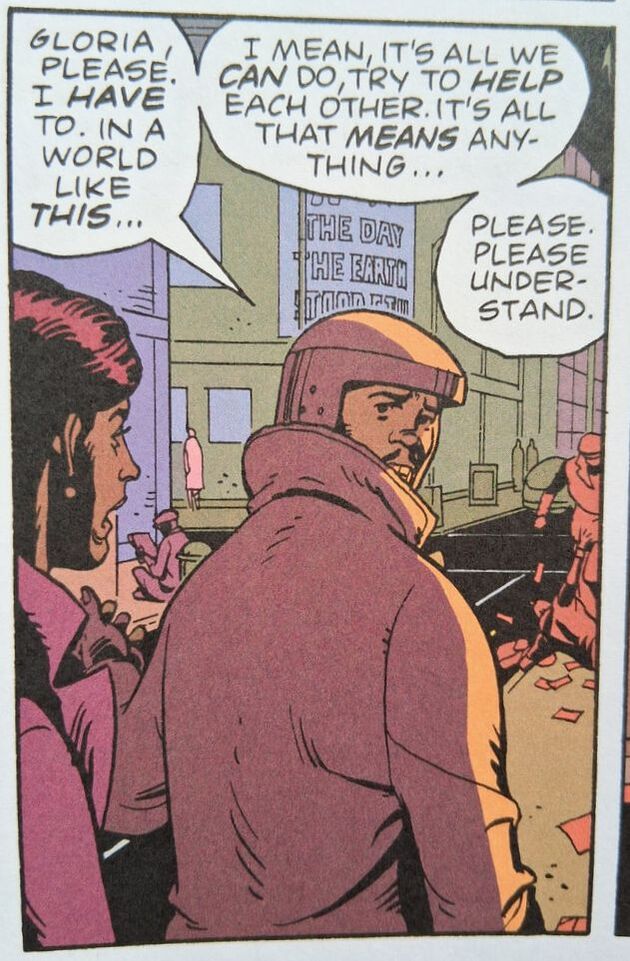 Dr Malcolm Long: actual, honest-to-goodness hero. That's all I've got to say, till I read the book again in six months or a year. My hat's off to Mr Moore and Mr Gibbons, and everyone who worked on the book. (I actually wrote a fan letter to Mr Moore, something I've always meant to do. I don't expect to hear back from him, but I hope he'll read it.) I'll leave you with this: Look how weird early designs were for Rorschach's costume! (From the "absolute" edition.) 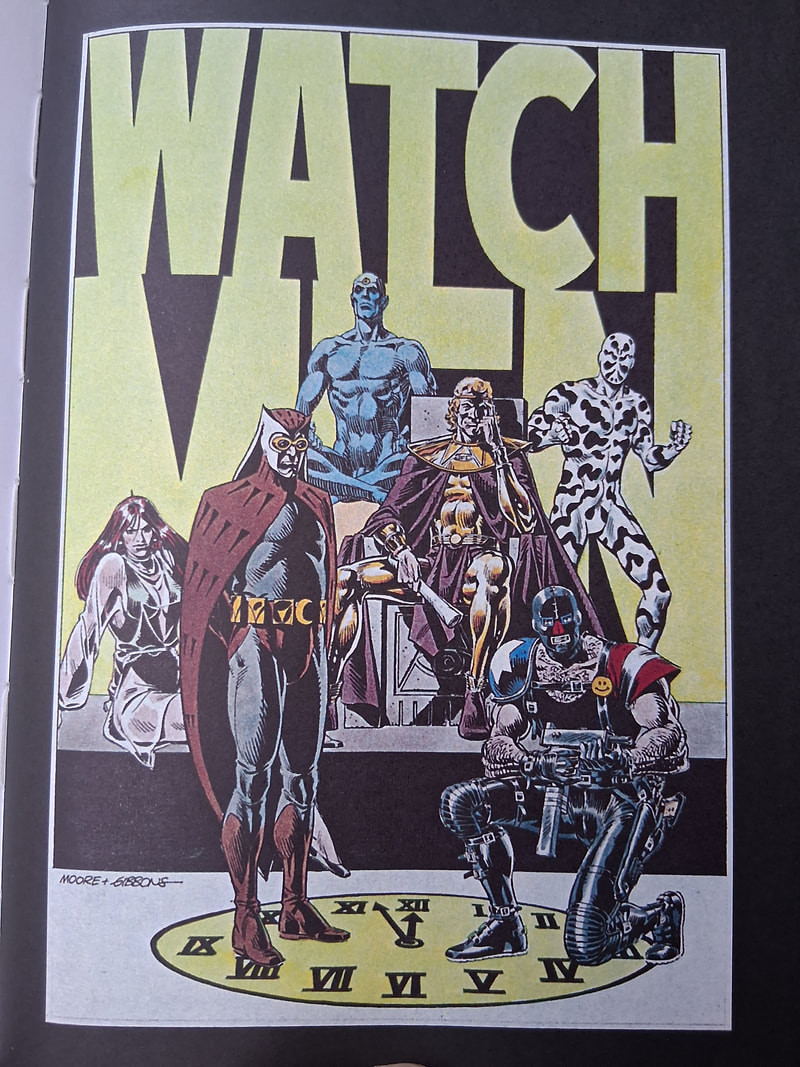
0 Comments
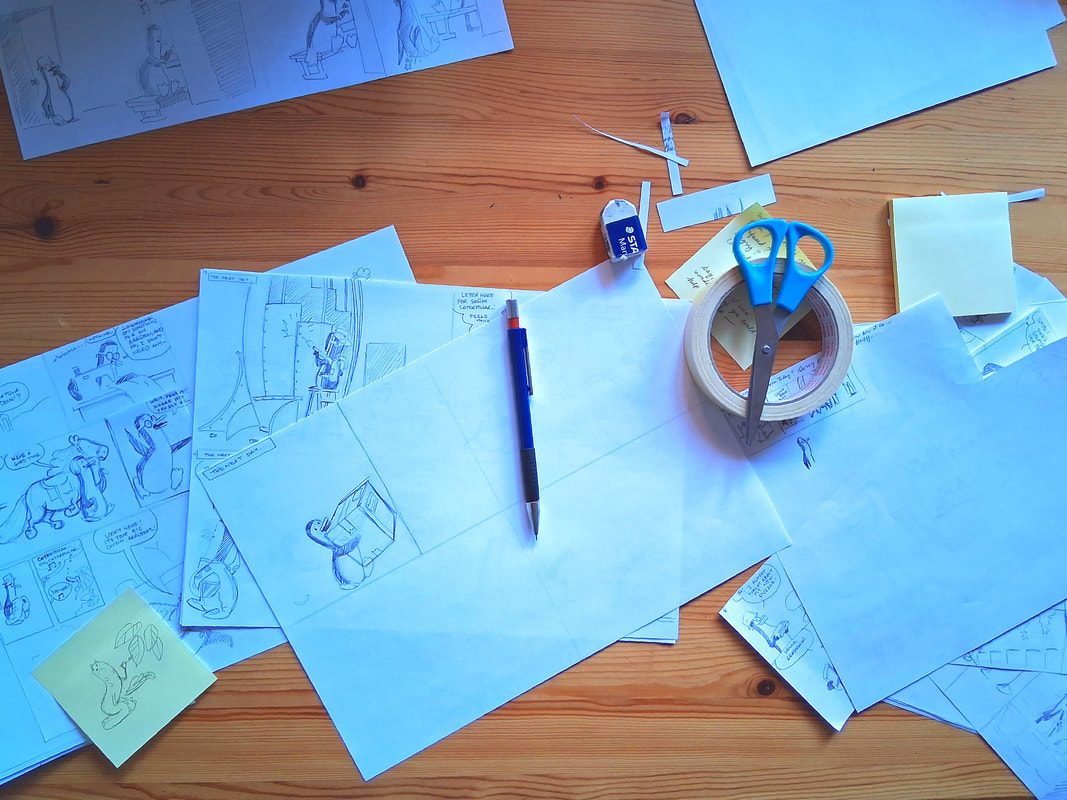 I'm writing the fourth or fifth draft of a picture book. Suddenly it's starting to come together, starting to feel like a real story, like I actually know what I'm doing. The big lesson for me over the past decade I've spent doing this professionally is to trust the process: every draft is a step in the right direction; if it stinks you just haven't done enough drafts, yet.
Don't get irate, iterate. What I love about iterating, about knowing I'm working on a draft which will be followed by another (and another), is that it takes the pressure off me to get it right. All I need to be doing is moving, working, writing -- any progress is a product of that, the new ideas that bring a project to life come from sitting with the thing and doing the work. (This is something that I think is missing from the various AI shortcuts people have been promoting to me, lately: if you spend a minute putting a prompt into a chatbot you'll get a minute's-worth of your own ideas; spend hours doing it yourself and you'll get a whole lot more -- it's basically the same principle as steeping a tea bag.) When I'm iterating I'm not a sculptor removing all the bits of marble that aren't my perfect statue, what I'm working with is something more like a hunk of clay that I can keep reworking till I create something pleasing enough that I want to tidy it up and keep it. Like you, like everyone, I still struggle to sit down and get to work, but a lot less than when I feel the pressure of having to produce something magnificent. When I'm doing creative work I have to basically throw away the idea of efficiency. I have to accept that I'm not doing a straightforward job like digging a hole, where there are a certain number of shovelfuls of dirt that I need to remove and the sooner I get them out of there -- bigger shovel, more umph -- the sooner I'll be done. I don't even know what I'm digging yet! If you come from a blue collar background, like I do, this is not easy, but I do my best to slow down and enjoy the process. I'll work on a sketch till it's more complete than would be absolutely necessary, if I feel like it. Who knows what I'll discover along the way? If I write a scrap of dialogue and suddenly it turns into a lengthy conversation, I'll go along for the ride. A lot of this will get thrown out (inefficient!), but by relaxing, playing along, I might discover something startling and wonderful. It's like looking for diamonds on a foggy day: you can't see them from camp, you have to start walking into the fog and hope you're going in the right direction. There are diamonds out there, scattered around. If you haven't found any then you haven't walked around enough. A few things I do: I check to make sure my internal dialogue is positive. I suspect that if I'm having a hard time getting started, if I'm not "inspired", it's because my internal dialogue needs to change from "everyone is going to hate this, I'm no good at this, what's the point?" to "I'm making something I care about, it's worthwhile, (and I must find time to write that Oscars acceptance speech!)". For the past couple of years I've been writing with pencils and pens on paper as much as I can. I find it much easier to write a first draft, and much easier to resist the urge to cut and paste and begin rearranging already; easier to push through and have a finished draft, which is what I need at this stage. Revising and polishing early drafts is what Lawrence Block unforgettably described as "washing garbage". When it's time to rewrite it's better to actually write it again than it is to cut and paste -- things will change for the better, and it will take longer -- which is good, your tea will be richer! I'm using scissors and tape to assemble parts of this latest draft, and not only is it slow and inefficient (which is good!) it's an utter, absolute joy, like doing an elementary school project. I put my phone not just out of reach, but out of sight. Sometimes I set an (analog) timer for 45 minutes or an hour, and during that time I'm not allowed to do anything but work, not even laudable things like write a birthday card to an elderly relative or clean the bathroom (although I can write those things on a list of things to do instead of scrolling social media later today). And this might be just me, but lately, I've been really liking to put in a pair of earplugs when I work. It's not noisy here, but somehow they help me concentrate and they make a sort of soothing white noise in my ears that's almost like having something to listen to. It's also a nice ritual. Perhaps most of all, it keeps ideas from escaping out my ears, and makes sure the only place they can go is into my writing hand. |
AuthorI'm a New Yorker cartoonist, author and illustrator. I'm also a father, a reader with widely varying tastes, an outdoorsman, and generally a curious person. Since I no longer feel like participating in social media, this is where I'll talk about stuff I feel like talking about in public. Feel free to chime in, in the spirit of having a chat over a cup of mint tea on my balcony. Archives
December 2025
Categories |
 RSS Feed